









There is a pattern that appears frequently in modernization projects: the project is delivered on time and within the approved budget. Go-live happens. The team celebrates.
Six months later, the company is spending more than it spent before.
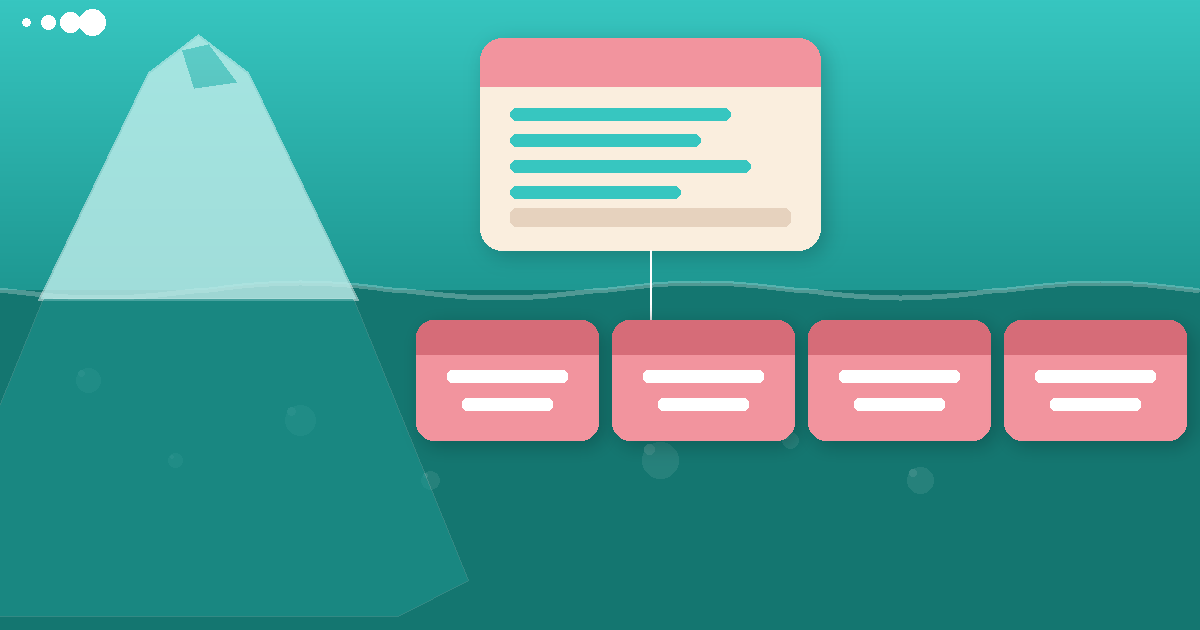
Not because of team incompetence. Not because of poor technology choices. But because the budget covered what was visible — and ignored what the old system knew how to do that the new one still does not.
What goes into a standard budget
A typical modernization budget covers the obvious: engineering hours, new infrastructure, tool licenses, data migration costs, user training. In more mature projects, a contingency reserve is also included — usually 15% to 20% of the total.
That budget is correct. The problem is what it does not account for.
The four costs the budget does not see
1. The cost of relearning what the old system already knew
Legacy systems that have operated for ten, fifteen years accumulate a volume of business logic that exists in no document: tax calculations specific to certain customers, exception rules for product segments, validations born from operational incidents that were never formally specified.
When the new system goes into production without having absorbed that knowledge, the team begins discovering what is missing — case by case, incident by incident.
2. The cost of the parallel operation period
In critical system modernizations, companies commonly need to operate both systems simultaneously for a period. That period is rarely short. What was planned as "two months of transition" frequently extends to six, eight, or twelve months.
3. The cost of rebuilding the shadow system
Around every legacy system exists a layer of manual processes that compensate for what the system does not do: control spreadsheets, confirmation emails, reconciliation routines done by hand every Monday morning.
The new system arrives with the promise of eliminating all of that. In practice, if those processes were not mapped and incorporated into scope, they reappear — in different forms, with the same purpose as before.
4. The cost of impact on areas no one listed as a stakeholder
Legacy systems frequently serve more areas than the project's official scope recognizes. When the new system goes live without having mapped those dependencies, those areas stop functioning — without warning, without a contingency plan.
Why these costs are predictable but rarely predicted
It is not a lack of experience. It is a lack of process.
A modernization budget is built from what needs to be built — the new system. What does not naturally enter that calculation is the work of understanding what the old system does that the new one must replicate, what it does that needs to be eliminated, and what it does that no one documented.
What a responsible modernization budget includes
Beyond construction costs, a well-structured budget accounts for:
Knowledge extraction phase — a dedicated period to map what the legacy system knows, identify real dependencies, and document the manual processes the new system will need to absorb.
Realistic parallel operation reserve — not the optimistic period, but the probable one. For critical systems, planning for six months is more honest than planning for two.
Post-go-live response capacity — a team with available bandwidth to handle the cases that surface in the first months in production.
External dependency mapping — a structured survey of who else depends on the system, beyond the formal stakeholders.
The question worth asking before approving the budget
When a modernization project comes up for approval, the most common question is about return on investment: how long does it take for the new system to pay for its construction cost?
The question that is missing is different: does the budget account for the work of understanding what the current system knows — before beginning to build its replacement?
If the answer is no, the project was already born with an unpriced risk.
Evaluating a modernization project and want to understand what the budget may be leaving out? VX has a structured diagnostic process that maps legacy system knowledge and operational risks before any technical proposal. Schedule a conversation.
Ready to accelerate your business with innovative software solutions?
Get in touch to discover how our custom software solutions can digitally transform your business.
Let's talk?